Parameters
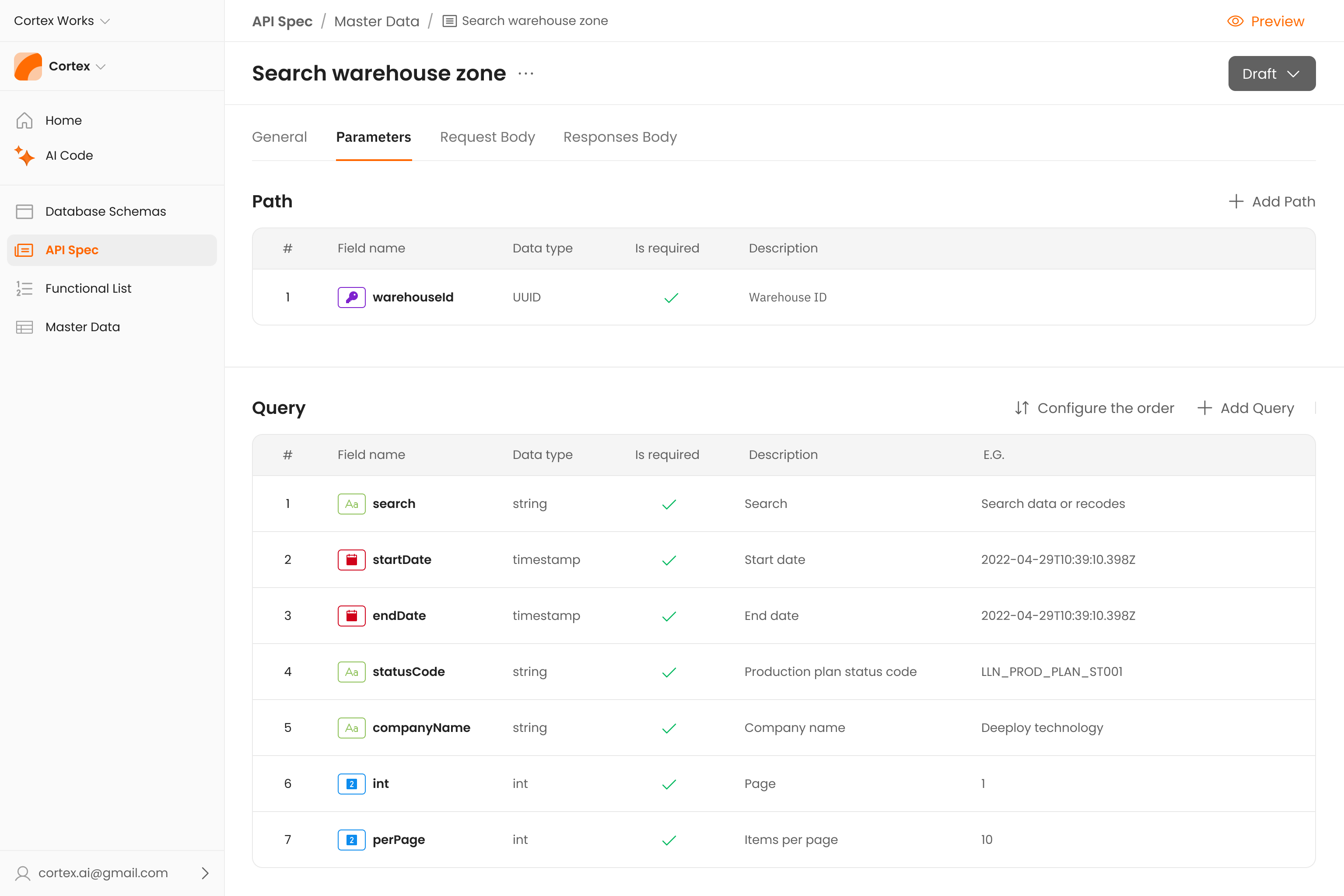
Parameters are used to pass additional information directly within the URL, allowing for more dynamic and specific requests.
Core Functionalities
1. Path Parameters
These are dynamic segments of the URL path, enclosed in curly braces (e.g., {userId}). They are typically used to identify a specific resource. For example, in /users/{userId}, userId is a path parameter.
2. Query Parameters
These are optional key-value pairs appended to the end of the URL after a question mark (?). They are used for filtering, sorting, or paginating results. For example, in /products?category=electronics, category is a query parameter.
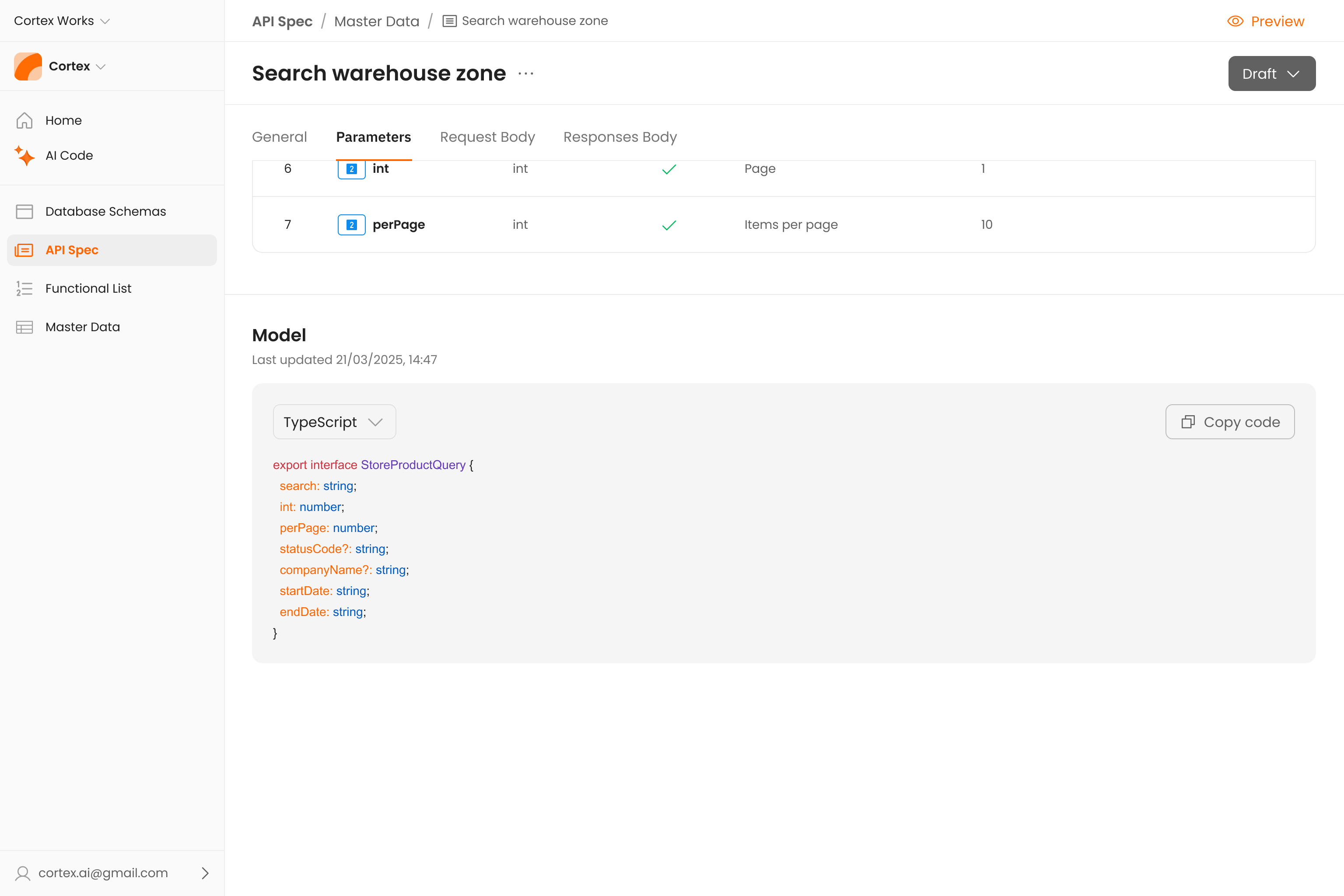
3. Automatic Code Generation
When you define query parameters, the system automatically generates a corresponding code model (like a class or struct). This saves developers from writing boilerplate code and ensures that all query options are handled in a structured, type-safe manner, reducing the risk of typos or errors.