Response Body
This section defines the structure of the data that your API will send back from a request. Having a well-defined response is just as important as having a well-defined request, as it dictates the "contract" for the data your client application will receive.
Core Functionalities
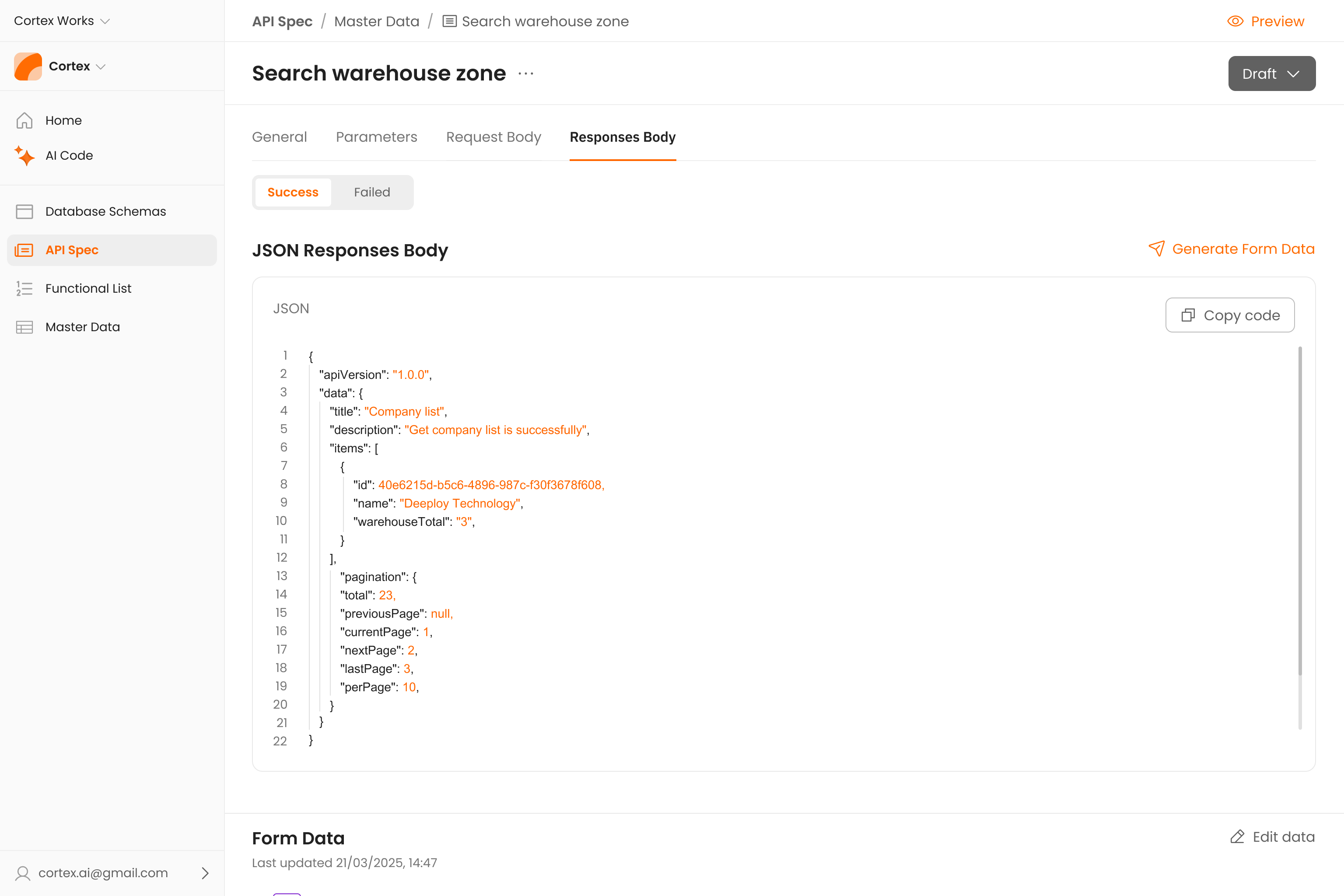
1. Design with JSON Editor
The process starts with the JSON editor, where you construct the JSON object that represents the API's output. The system then parses this JSON, automatically transforming it into a structured list of individual field records.
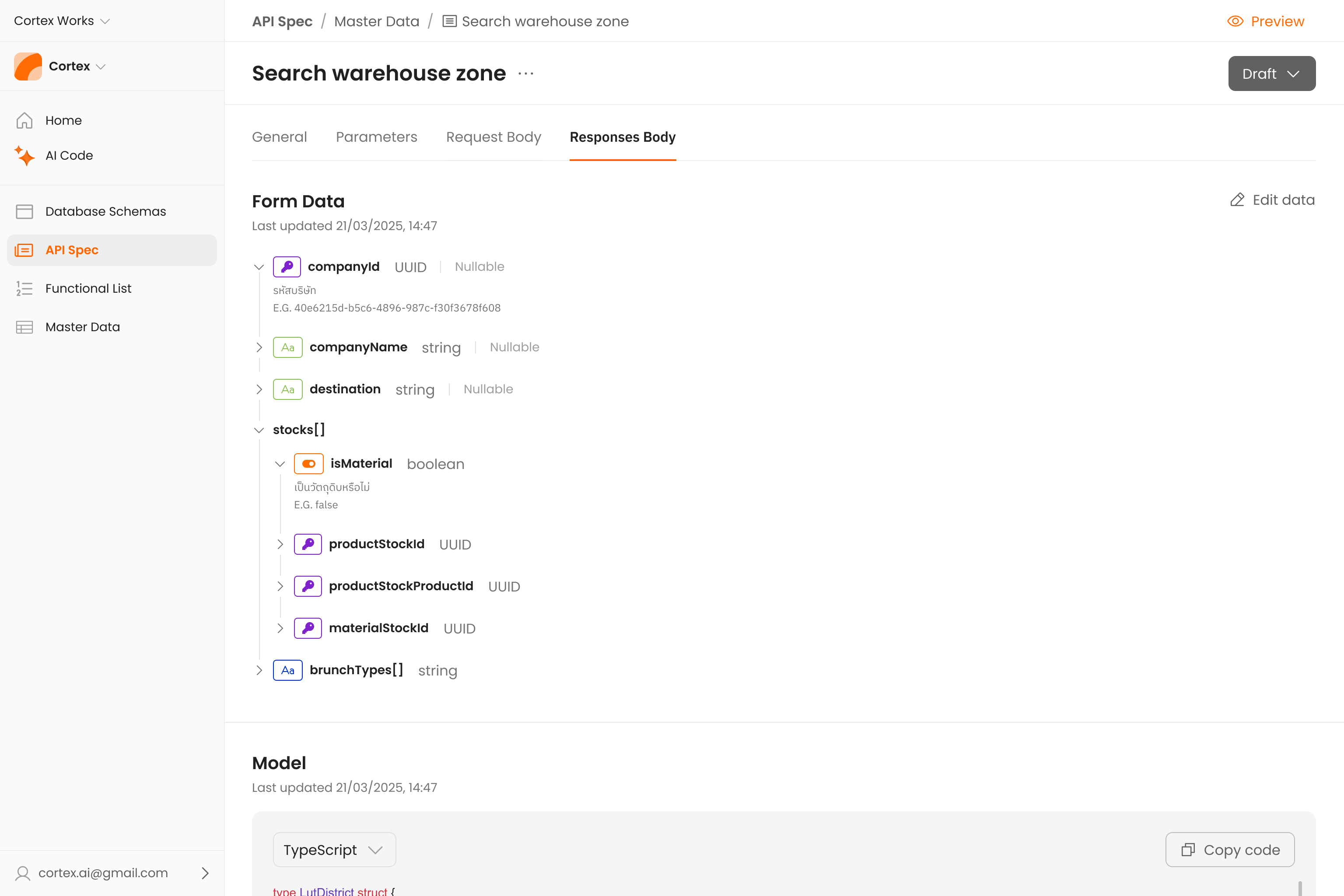
2. Document Each Field
For each record generated from a JSON field, you can add a human-readable description. This allows you to document the purpose of every single field within your payload. This structured data, complete with descriptions, is then saved as a set of records, not as a raw JSON file.
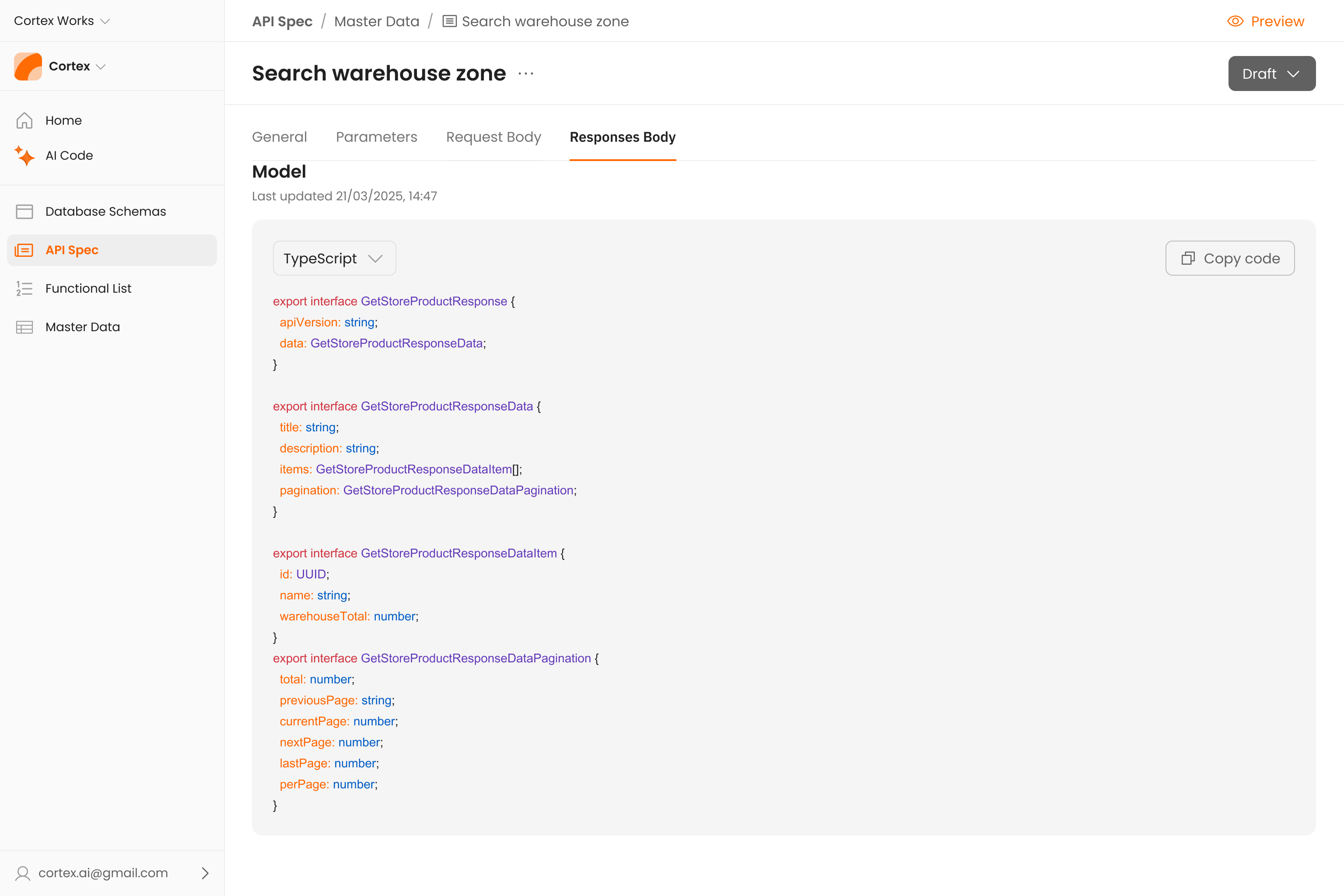
3. Generate FE & BE Code Models
Based on the final, documented record structure, the system generates the corresponding code models for the client (e.g., frontend). This allows developers consuming the API to know exactly what data structure to expect, enabling them to handle the response with type safety and confidence, which prevents runtime errors.